
What Is Answer Engine Optimization (AEO)?
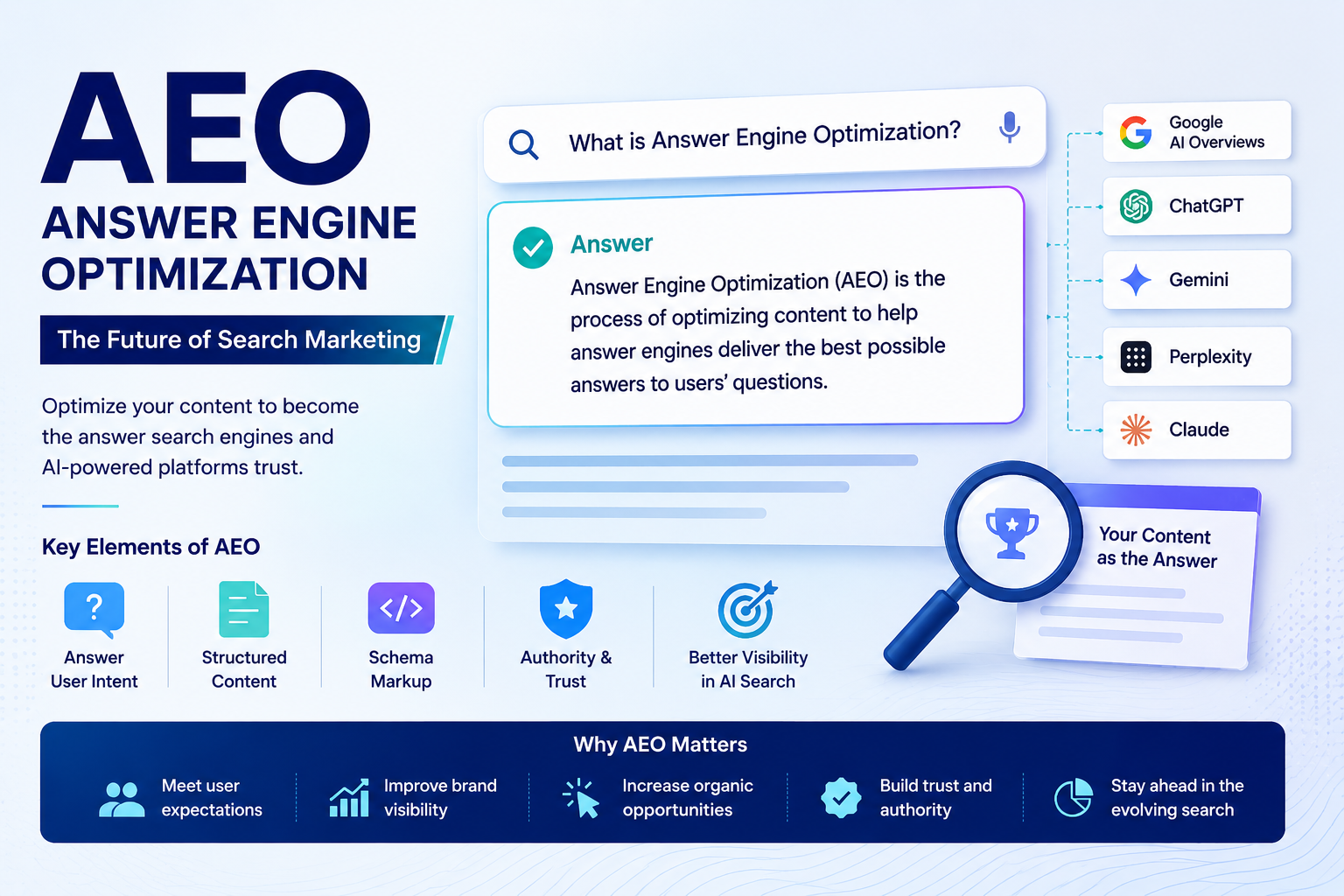
Answer Engine Optimization (AEO) is the process of optimizing your content so that AI-powered search engines and answer platforms can easily understand, extract, and present your information as direct answers to users’ questions.
Unlike traditional SEO, which focuses on improving rankings and driving clicks, AEO focuses on becoming the trusted source that AI systems cite when generating answers.
The goal is simple: make your content the answer that search engines and AI assistants choose to display.
Why AEO Matters in 2026
The way people search online is changing dramatically. Instead of typing short keywords, users now ask complete questions such as:
- What is the best SEO strategy for small businesses?
- How can I improve my website’s AI search visibility?
- What is the difference between SEO and AEO?
AI-powered platforms analyze multiple sources and generate concise responses instantly. If your content is optimized for these answer engines, your brand can gain visibility even when users never click through to your website.
This shift makes AEO one of the most important digital marketing strategies for businesses looking to stay competitive.
AEO vs Traditional SEO
While SEO and AEO work together, they have different objectives.
Traditional SEO Focuses On:
- Keyword rankings
- Organic traffic
- Backlinks
- Search engine result pages
- Click-through rates
AEO Focuses On:
- Direct answers
- AI citations
- Structured content
- Question-based optimization
- Authority and trust signals
Think of AEO as the next evolution of SEO rather than a replacement.
Key Elements of Successful AEO
1. Create Question-Based Content
Most AI searches begin with a question. Structure your content around common user queries and provide clear, concise answers.
Examples:
- What is Answer Engine Optimization?
- How does AEO improve online visibility?
- Why is AEO important for businesses?
2. Use Clear Headings and Structure
AI systems prefer well-organized content. Use logical heading structures (H1, H2, H3) and break information into easy-to-understand sections.
This helps answer engines quickly identify relevant information.
3. Optimize for Featured Snippets
Featured snippets often serve as training signals for answer engines. Create short, direct answers near the beginning of each section.
Aim to answer important questions within 40–60 words before expanding on the topic.
4. Implement Structured Data
Schema markup helps search engines understand your content more effectively.
Useful schema types include:
- FAQ Schema
- Article Schema
- How-To Schema
- Organization Schema
Structured data increases the likelihood of your content being selected for AI-generated answers.
5. Build Topical Authority
AI platforms prioritize trustworthy and authoritative sources.
Create comprehensive content clusters around your niche, regularly update information, and demonstrate expertise through high-quality content.
The more authority your website builds, the more likely answer engines are to reference your content.
Best Practices for AEO Success
To improve your answer engine visibility:
- Write content in a conversational tone.
- Focus on user intent rather than keywords alone.
- Include FAQ sections.
- Use simple and direct language.
- Support claims with credible sources.
- Optimize for mobile and page speed.
- Keep content accurate and regularly updated.
These practices help both traditional search engines and AI-powered answer platforms understand and trust your content.
The Future of Search Marketing
The future of search is becoming increasingly answer-focused. AI assistants are changing how people discover information, products, and services online.
Businesses that adapt early to Answer Engine Optimization will gain a significant advantage by increasing visibility across AI-powered platforms. Rather than competing solely for rankings, brands can position themselves as trusted sources that answer engines rely on.
As AI search continues to grow, combining SEO, AEO, and Generative Engine Optimization (GEO) will be essential for long-term digital success.
