
Artificial Intelligence (AI) is transforming the way people search for information online. Traditional search engines are no longer the only source users rely on. Today, platforms like ChatGPT, Google AI Overviews, Gemini, and Perplexity are providing direct answers to user queries, changing how people discover content and interact with websites.
What Is AI Search?
AI search uses artificial intelligence to understand user queries and provide direct, conversational answers. Instead of showing a list of web pages, AI search tools summarize information from multiple sources and present it in an easy-to-understand format.
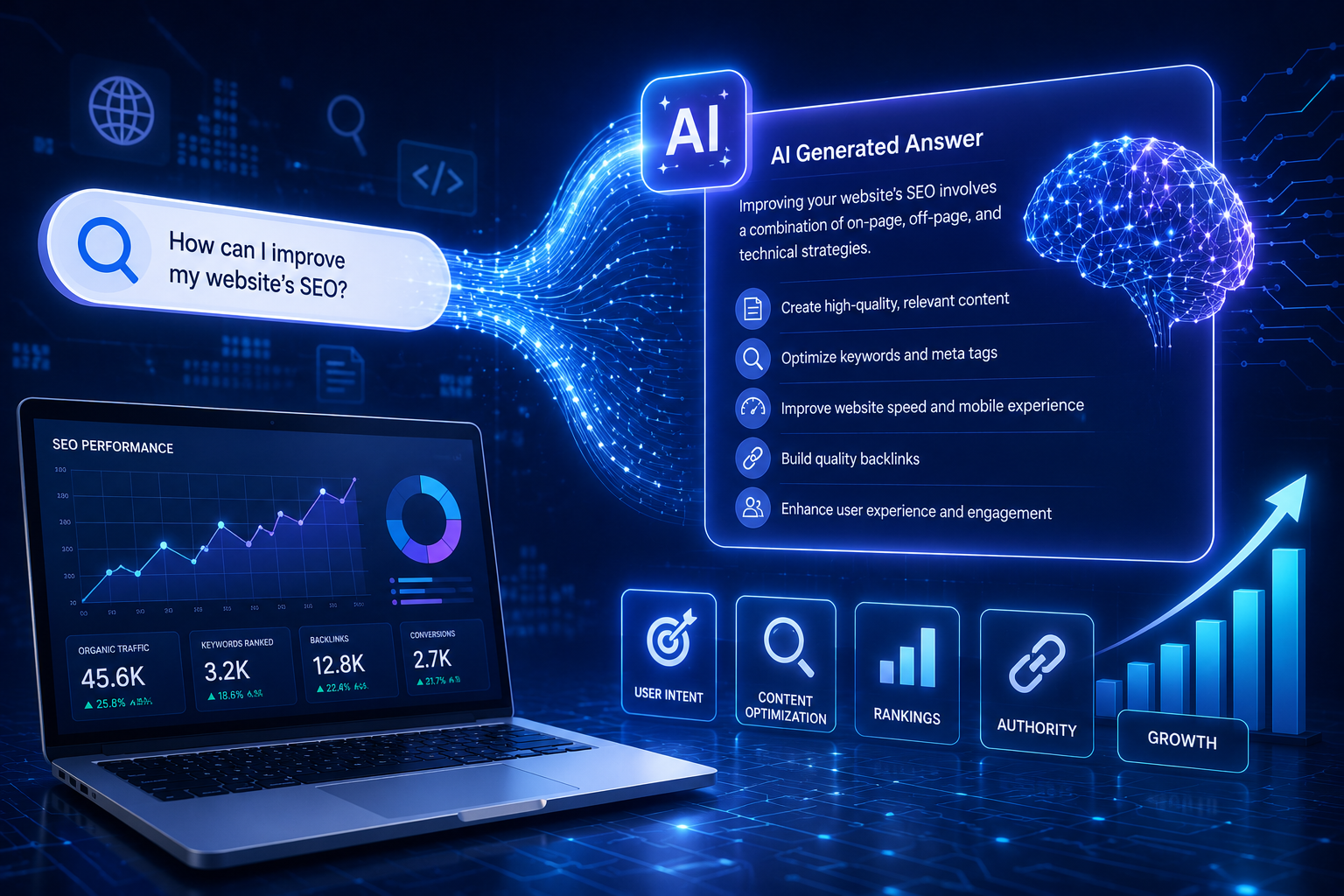
For example, if a user asks, “How can I improve my website’s SEO?” An AI search platform may provide a detailed answer immediately rather than requiring the user to visit several websites.
This shift is changing the way users interact with search engines and the way businesses approach SEO.
Why AI Search Matters for SEO
The rise of AI search is influencing how content is discovered online. Users are increasingly looking for quick and accurate answers instead of browsing through multiple search results.
As a result, search engines are prioritizing content that is:
- Helpful and informative
- Well-structured
- Easy to understand
- Relevant to user intent
- Trustworthy and authoritative
Websites that create valuable content and answer user questions clearly are more likely to gain visibility in both traditional search results and AI-generated responses.
How AI Search Is Changing SEO Strategies
1. User Intent Is More Important Than Keywords
For years, SEO focused heavily on keyword optimization. While keywords still matter, AI search engines are much better at understanding the meaning behind a search query.
Instead of targeting a single keyword repeatedly, businesses should focus on understanding what users actually want to know. Content should answer questions, solve problems, and provide useful information.
For example, rather than creating content solely around the keyword “SEO services,” businesses should address related questions such as:
- What are SEO services?
- How do SEO services help businesses grow?
- Are SEO services worth the investment?
This approach helps content align with user intent and improves its chances of being featured in AI-generated answers.
2. Content Quality Is Becoming a Major Ranking Factor
AI search platforms prioritize content that demonstrates expertise and provides genuine value.
Thin content written only to rank for keywords is becoming less effective. Instead, businesses should focus on creating detailed, accurate, and well-researched articles that address user needs.
High-quality content should:
- Include practical insights
- Answer common questions
- Be easy to read
- Provide up-to-date information
- Demonstrate industry expertise
The more useful your content is, the more likely it is to be referenced by AI search systems.
3. Structured Content Improves Visibility
AI tools prefer content that is organized and easy to understand.
To improve visibility, businesses should structure content using:
- Clear headings and subheadings
- Bullet points
- Numbered lists
- FAQ sections
- Short paragraphs
Well-structured content helps AI systems quickly identify key information and increases the likelihood of appearing in featured snippets and AI summaries.
4. Answer Engine Optimization (AEO) Is Gaining Importance
One of the biggest changes in SEO is the rise of Answer Engine Optimization (AEO).
AEO focuses on optimizing content so AI-powered search engines can easily extract and present it as a direct answer to user questions.
Businesses can improve AEO by:
- Using question-based headings
- Adding FAQ sections
- Providing concise answers
- Implementing schema markup
- Writing in a conversational tone
As AI search becomes more popular, AEO will become an essential part of every SEO strategy.
5. Building Topical Authority Matters More Than Ever
Search engines and AI platforms want to recommend content from trusted sources.
Instead of publishing random articles, businesses should focus on creating content clusters around specific topics.
For example, a digital marketing agency could publish articles on:
- Technical SEO
- Local SEO
- SEO audits
- Link building
- AI search optimization
Creating multiple pieces of related content helps establish expertise and increases trust with both search engines and AI systems.
How Businesses Can Prepare for AI Search
To stay competitive in 2026, businesses should focus on creating content that serves both users and AI platforms.
Some best practices include:
- Prioritizing user intent over keyword stuffing
- Publishing high-quality, original content
- Optimizing for FAQs and conversational searches
- Using schema markup to improve content understanding
- Strengthening internal linking strategies
- Updating older content regularly
These strategies can help improve visibility across traditional search results and AI-powered search experiences. The future of SEO is not about choosing between traditional search and AI search. It is about combining both approaches to create content that is helpful, trustworthy, and easy to understand.
