
In the world of digital marketing, one of the most common questions businesses ask is: “How long does SEO take to work?” The answer is simple, SEO is not an overnight process. It takes time, consistency, and the right strategy to achieve strong rankings and long-term organic traffic.
While some websites may see early improvements within a few weeks, most businesses typically start noticing meaningful SEO results within 3 to 6 months. Competitive industries may take even longer.
In this blog, we’ll explain the timeline of SEO results, what affects SEO growth, and how businesses can speed up the process.
What Is SEO?
Search Engine Optimization (SEO) is the process of improving your website’s visibility on search engines like Google. SEO helps your website rank higher for relevant keywords, bringing in more organic traffic, leads, and customers.
SEO includes:
- Keyword optimization
- Content creation
- Technical website improvements
- Link building
- Local SEO
- User experience optimization
Why SEO Takes Time
Search engines need time to:
- Crawl your website
- Understand your content
- Compare your site with competitors
- Evaluate website authority
- Monitor user engagement signals
SEO is based on trust and relevance. Search engines do not instantly rank new websites at the top because they first need evidence that your content is valuable and reliable.

Typical SEO Timeline
Month 1: Website Audit & Research
During the first month, SEO experts usually focus on:
- Website analysis
- Keyword research
- Competitor analysis
- Technical SEO fixes
- Content planning
At this stage, rankings may not change much, but the foundation is being built.
Month 2–3: On-Page Optimization & Content Creation
This phase includes:
- Optimizing pages for keywords
- Improving website speed
- Publishing blog content
- Fixing indexing issues
- Improving user experience
You may start noticing:
- Better keyword impressions
- Increased website crawling
- Small ranking improvements
Month 4–6: Traffic Growth & Ranking Improvements
This is where many businesses begin seeing visible results.
Possible improvements include:
- Higher rankings on search engines
- Increased organic traffic
- More inquiries and leads
- Better domain authority
- Improved local search visibility
Businesses targeting low-competition keywords may see faster growth.
6–12 Months: Stronger SEO Performance
With consistent SEO efforts, websites can achieve:
- Stable keyword rankings
- High-quality traffic
- Increased conversions
- Better brand authority
- Long-term growth
SEO becomes more powerful over time because your website gains trust and authority.
Factors That Affect SEO Results
1. Website Age
Older websites often rank faster because search engines already trust them.
New websites usually take more time to build authority.
2. Competition Level
Highly competitive industries require more time and effort to rank.
For example:
- “Digital Marketing Agency” → High competition
- “SEO Services in Dehradun” → Lower competition
Local keywords often show faster results.
3. Content Quality
High-quality, informative, and SEO-friendly content performs better in search results.
Regular blogging can significantly improve SEO growth.
4. Technical SEO
A slow or poorly optimized website can delay rankings.
Technical SEO includes:
- Mobile responsiveness
- Fast loading speed
- Proper indexing
- Secure HTTPS connection
- Clean website structure
5. Backlinks
Backlinks from trusted websites improve your website authority and help rankings grow faster.
Quality matters more than quantity.
6. Consistency
SEO requires regular updates and ongoing optimization.
Websites that consistently publish valuable content usually perform better over time.
Can SEO Results Be Faster?
Yes, but only with the right strategy.
Here are some ways to speed up SEO growth:
- Target low-competition keywords
- Optimize local SEO
- Publish high-quality content regularly
- Improve website speed
- Build quality backlinks
- Use proper keyword strategy
- Focus on user experience
However, avoid shortcuts like keyword stuffing or buying spam backlinks. These methods can harm rankings.
SEO vs Paid Ads: Which Is Faster?
Paid advertising like Google Ads or Meta Ads can generate immediate traffic, while SEO takes time.
But SEO provides:
- Long-term traffic
- Better credibility
- Higher ROI over time
- Sustainable growth
Many successful businesses use both SEO and paid ads together.
Signs Your SEO Is Working
Even before top rankings appear, you may notice:
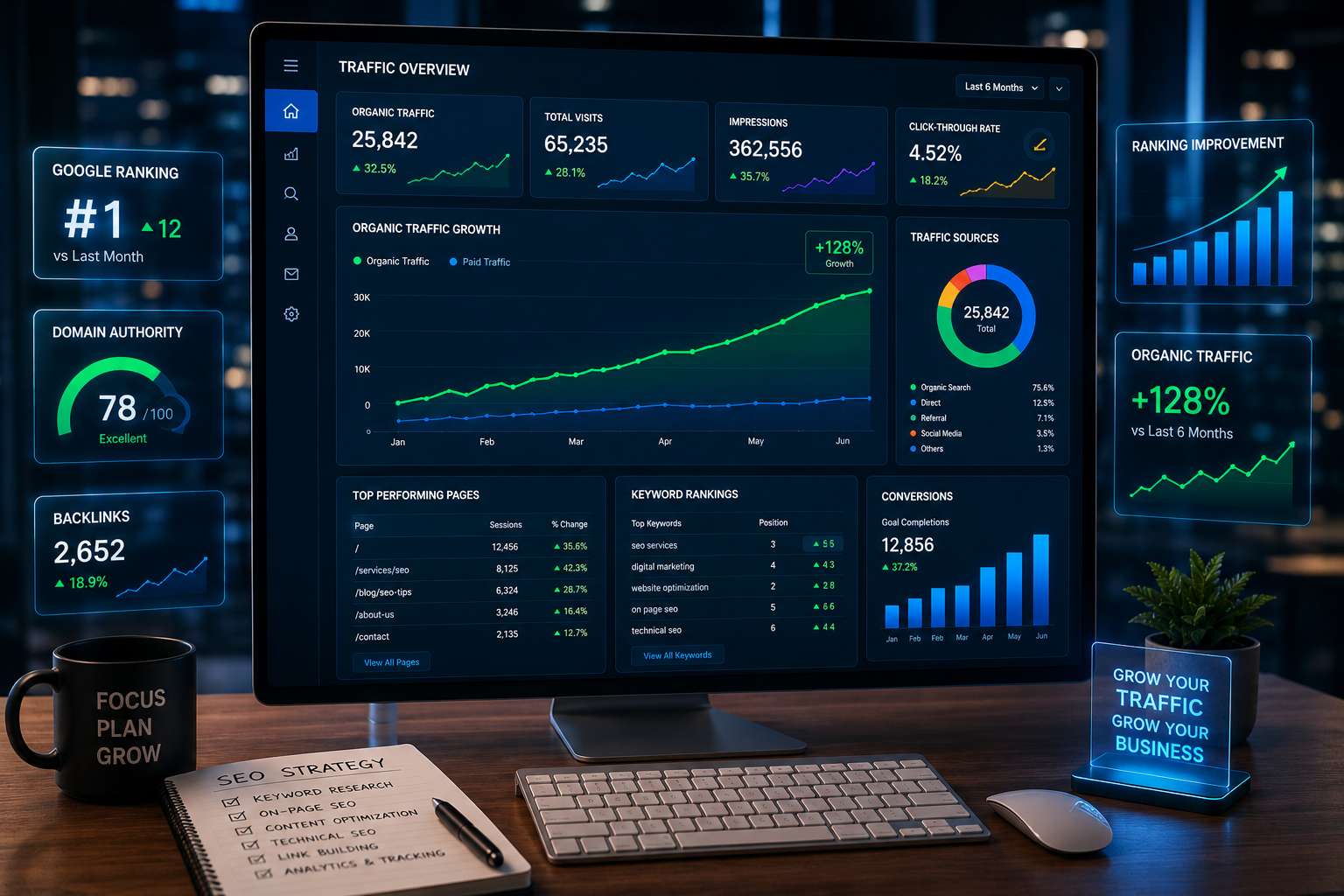
- Increased website impressions
- More keyword visibility
- Better click-through rates
- Growing organic traffic
- More engagement on content
- Increased leads and inquiries
SEO progress often happens gradually.
Common SEO Mistakes That Delay Results
Avoid these common mistakes:
- Expecting instant rankings
- Using duplicate content
- Ignoring technical SEO
- Targeting highly competitive keywords too early
- Publishing low-quality content
- Inconsistent SEO efforts
SEO is a long-term investment, not a quick fix. Most businesses start seeing measurable improvements within 3 to 6 months, while stronger results usually appear after 6 to 12 months of consistent work.
The good news is that once SEO starts working, it can continue bringing traffic and leads for years.
