
Every business wants more leads, better visibility, and higher sales but choosing the right advertising platform can feel overwhelming. With so many options available, two platforms dominate the conversation: Meta Platforms Ads and Google Ads.
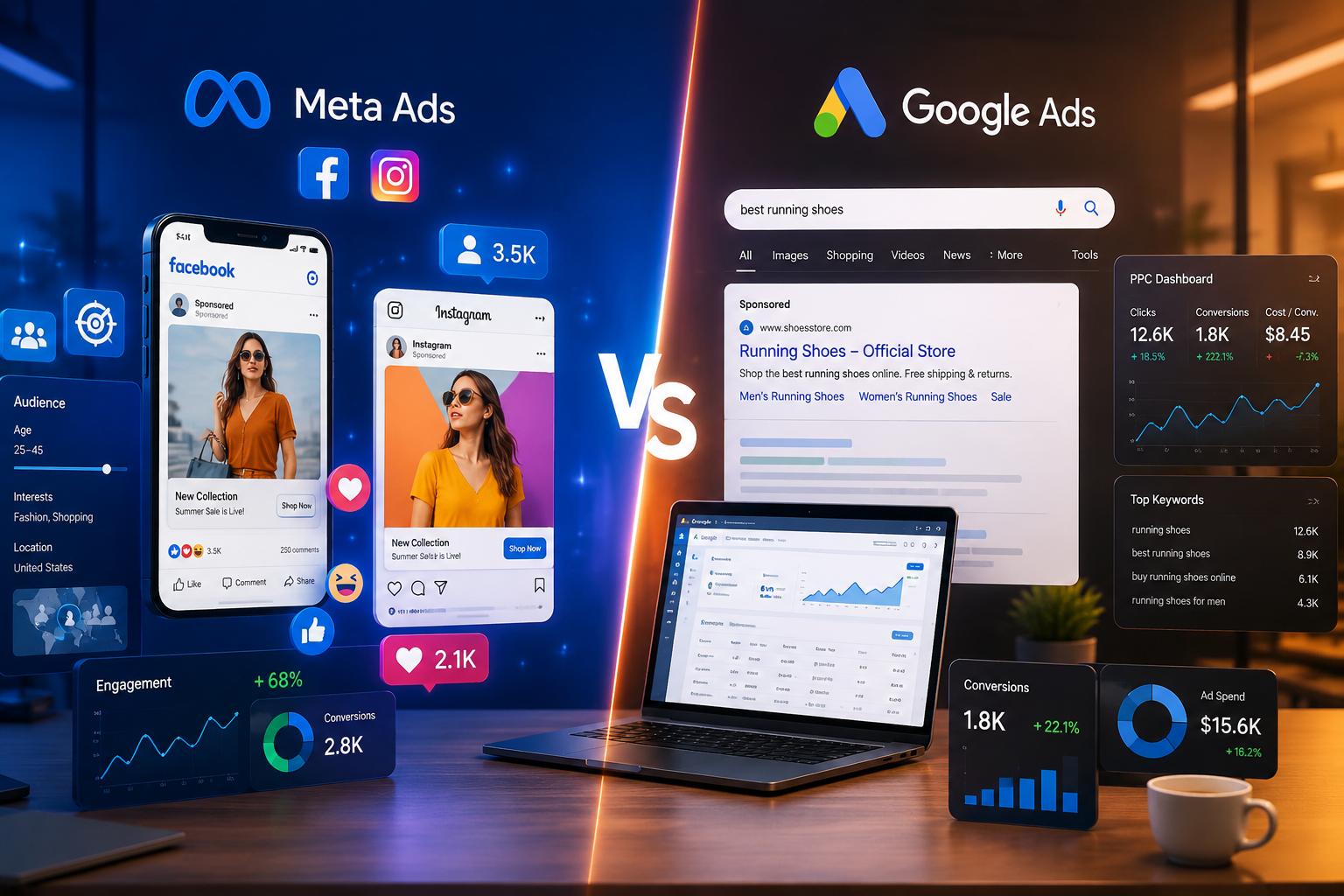
While both are powerful, they work in completely different ways. One helps you create demand, while the other helps you capture it. Understanding this difference is key to making the right investment for your business.
Understanding Meta Ads
Meta Platforms Ads (formerly Facebook Ads) allow businesses to advertise across platforms like Facebook and Instagram.
These ads are highly visual and appear in users’ feeds, stories, reels, and more.
Key Strengths:
- Advanced audience targeting (interests, behavior, demographics)
- Ideal for brand awareness and engagement
- Great for visual content (images, videos, reels)
- Lower cost per impression compared to search ads
Understanding Google Ads for Business Growth
Google Ads allow businesses to show ads on search results, YouTube, and partner websites.
These ads target users based on intent, meaning they appear when someone is actively searching for a product or service.
Key Strengths:
- High-intent audience (ready to buy/searching)
- Immediate visibility on search results
- Multiple ad formats (search, display, video, shopping)
- Strong for lead generation and conversions
Core Differences Between Meta Ads and Google Ads
1. Audience Targeting
Meta Ads: Target users based on interests and behavior
Google Ads: Target users based on search intent
If your audience doesn’t know your brand yet, Meta Ads can help you reach them first.
2. Buyer Intent
Meta Ads: Users are browsing (passive intent)
Google Ads: Users are actively searching (high intent)
If you want quick conversions, Google Ads usually performs better.
3. Cost Comparison
Meta Ads: Lower CPC (cost per click), good for awareness
Google Ads: Higher CPC but better conversion rates
Meta is cost-effective for reach; Google is efficient for ROI.
4. Ad Format
Meta Ads: Visual-heavy (images, reels, carousels)
Google Ads: Text-based (search) + visual (display, YouTube)
5. Best Use Cases
Use Meta Ads if you want to:
- Build brand awareness
- Grow social media presence
- Promote visually appealing products
- Run retargeting campaigns
Use Google Ads if you want to:
- Generate leads or sales quickly
- Target high-intent users
- Capture demand (people already searching)
Which One Should You Choose?
Here’s a smart approach:
- Start with Meta Ads to create awareness and interest
- Use Google Ads to capture demand and convert leads
- Combine both for a full-funnel marketing strategy
Real-World Example
Imagine you run a digital marketing agency:
- Meta Ads introduce your services to new audiences
- Google Ads capture users searching “digital marketing agency near me”
Together, they create a powerful growth system.
Which Advertising Platform Is Right for Your Business?
Choosing between Meta Ads and Google Ads depends on your business goals, budget, and target audience.
- Want visibility and engagement? → Go with Meta Ads
- Want leads and conversions? → Choose Google Ads
- Want maximum growth? → Combine both
A balanced strategy will always outperform relying on just one platform.
