
Social media has become one of the most effective marketing channels for businesses of all sizes. Whether you’re a startup, a local business, or a global brand, platforms like Instagram, Facebook, LinkedIn, TikTok, and X offer incredible opportunities to connect with your audience. By investing in professional SMO services, businesses can improve their online visibility, build stronger customer relationships, and create a consistent brand presence across multiple social media platforms.
However, one question continues to challenge marketers:
Should you invest in organic social media marketing or paid social media marketing?
The answer depends on your goals, budget, and timeline. While organic marketing helps build long-term relationships and brand trust, paid campaigns can deliver immediate visibility and measurable results.
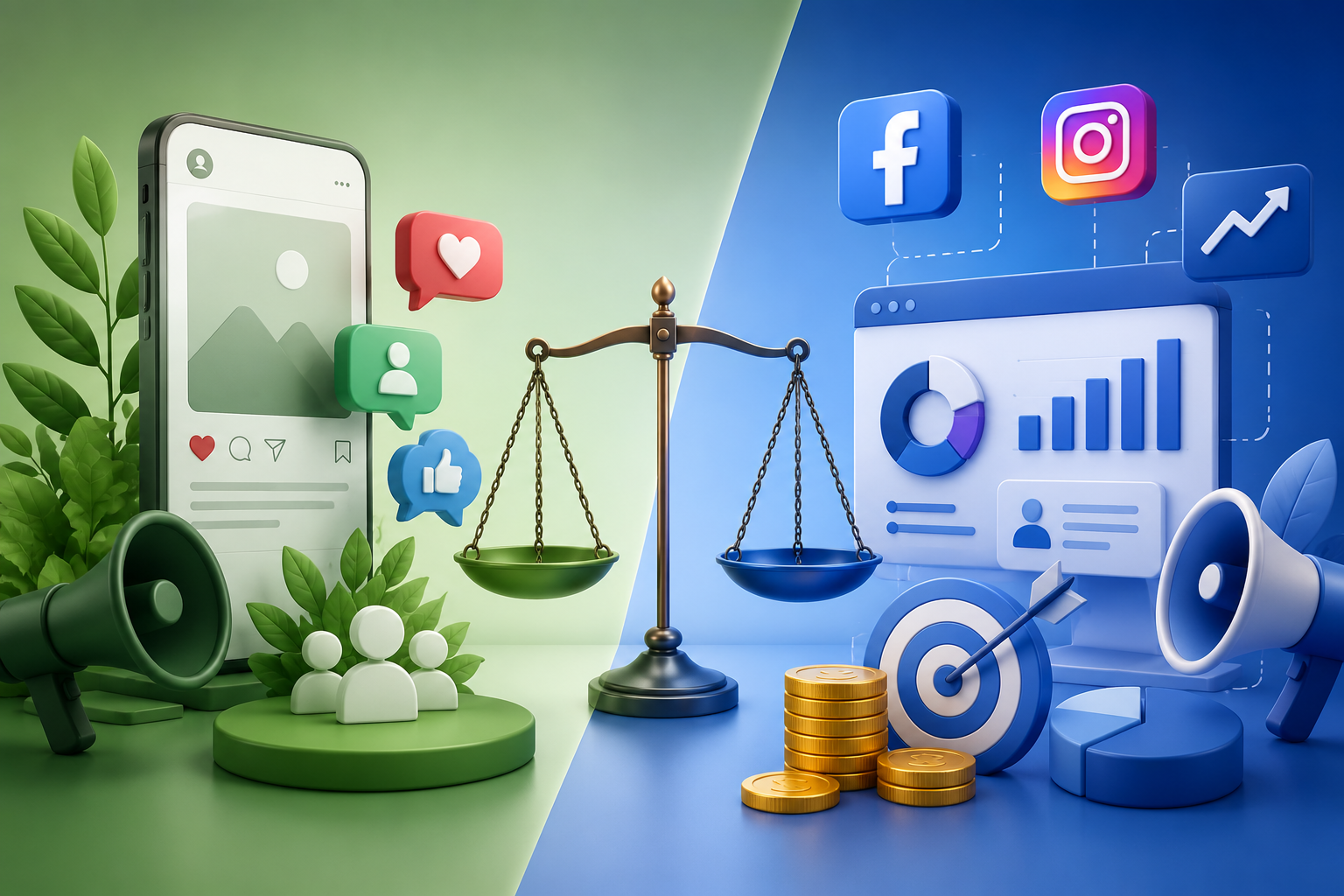
What Is Organic Social Media Marketing?
Organic social media marketing refers to all the content you publish without paying for distribution. This includes:
- Regular posts
- Reels
- Stories
- Carousels
- Educational videos
- Live sessions
- Community engagement
- User-generated content
The goal is to grow your audience naturally through valuable content and meaningful interactions.
Benefits of Organic Social Media
- Builds trust and credibility
- Creates long-term brand awareness
- Improves customer relationships
- Encourages community engagement
- Cost-effective for small businesses
- Supports SEO through increased brand searches
Challenges
- Slower growth
- Declining organic reach on many platforms
- Requires consistent content creation
- Results take time
What Is Paid Social Media Marketing?
Paid social media marketing involves promoting content using advertising platforms such as:
- Facebook Ads
- Instagram Ads
- LinkedIn Ads
- TikTok Ads
- Pinterest Ads
- X Ads
Businesses pay to reach a specific audience based on demographics, interests, behaviors, or purchasing intent.
Benefits of Paid Social Media
- Instant reach
- Highly targeted audiences
- Fast lead generation
- Better conversion opportunities
- Detailed campaign analytics
- Easy budget scaling
Challenges
- Requires advertising budget
- Results stop when ads stop
- Poorly optimized campaigns can waste money
- Requires regular monitoring and optimization
Which Strategy Delivers Better ROI?
The answer depends on your business objectives.
Organic Marketing Delivers Better ROI When
- Building a long-term brand
- Growing a loyal community
- Increasing engagement
- Educating your audience
- Improving customer retention
Organic content continues generating value long after it’s published.
Paid Marketing Delivers Better ROI When
- Launching a new product
- Running seasonal campaigns
- Generating leads quickly
- Promoting limited-time offers
- Driving website traffic
- Increasing online sales
Paid campaigns can produce results within hours when managed effectively.
Why Combining Both Strategies Works Best
The highest-performing brands don’t choose one—they combine both.
A smart strategy includes:
Organic Content
- Educational posts
- Industry tips
- Behind-the-scenes content
- Customer testimonials
- Reels
- Stories
- Community engagement
Paid Campaigns
- Lead generation ads
- Website traffic campaigns
- Retargeting visitors
- Product promotions
- Event registrations
- Special offers
Organic content builds trust, while paid advertising amplifies your best-performing content to the right audience.
Tips to Maximize Social Media ROI
- Define Clear Goals
Know whether you’re aiming for:
- Brand awareness
- Leads
- Website traffic
- Sales
- Engagement
- Track the Right Metrics
Monitor:
- Reach
- Engagement rate
- Click-through rate (CTR)
- Cost per lead (CPL)
- Cost per acquisition (CPA)
- Conversion rate
- Return on ad spend (ROAS)
- Repurpose High-Performing Content
If an organic Reel performs well, use it as a paid advertisement to reach more people. This often improves ad performance because the content has already proven engaging.
- Test Different Content Formats
Experiment with:
- Short videos
- Carousels
- Infographics
- Stories
- Polls
- Live videos
Regular testing helps identify what resonates most with your audience.
- Optimize Landing Pages
Even the best social media campaign won’t succeed if users land on a slow or confusing website. Ensure your landing pages are fast, mobile-friendly, and designed to convert visitors into customers.
Which Is Better for Small Businesses?
For most small businesses, the ideal approach is:
- Build a strong organic presence with consistent, valuable content.
- Use paid campaigns strategically for launches, promotions, and lead generation.
- Analyze performance and adjust your budget based on what delivers the best results.
This balanced strategy allows businesses to grow sustainably while taking advantage of the speed and precision of paid advertising.
