
Keyword research is the backbone of every successful SEO strategy. It’s not just about finding popular searches, it’s about understanding what your audience is looking for, why they’re searching, and how you can deliver exactly what they need. When done right, keyword research helps you attract the right traffic, improve rankings, and convert visitors into customers.
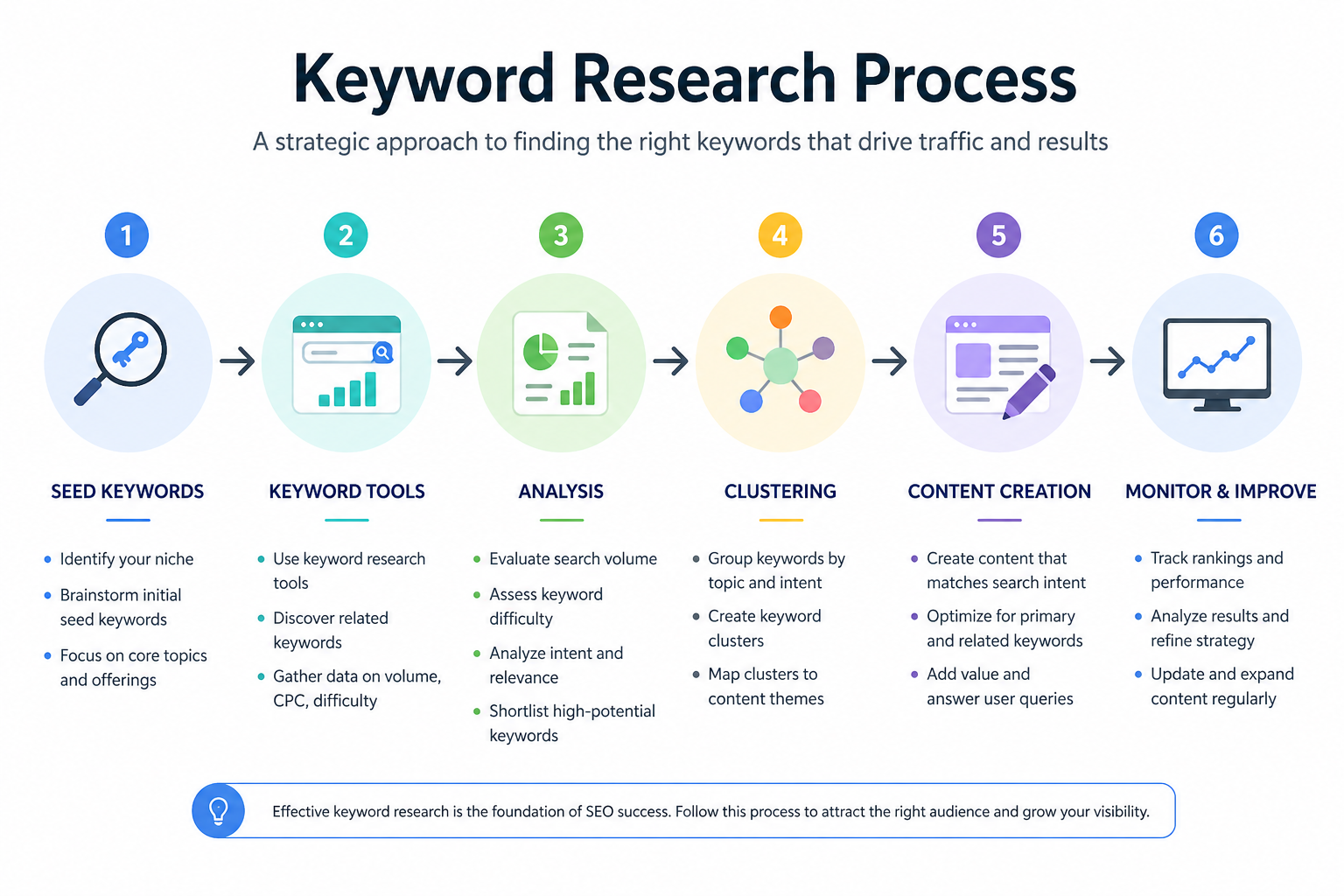
1. Understand Your Target Audience
Before you even open an SEO tool, start by defining your audience. Ask yourself:
- Who are they?
- What problems are they trying to solve?
- What language do they use while searching?
A professional approach focuses on user intent, not just keywords. There are four main types of search intent:
- Informational (e.g., “what is SEO”)
- Navigational (e.g., “SEO agency near me”)
- Transactional (e.g., “buy SEO services”)
- Commercial (e.g., “best SEO agency in India”)
Understanding intent ensures your content matches what users actually want.
2. Start with Seed Keywords
Seed keywords are the basic terms related to your business. For example, if you offer SEO services, your seed keywords might include:
- SEO services
- digital marketing
- website optimization
From these, you can expand into hundreds of related keyword ideas using tools and research techniques.
3. Use Keyword Research Tools
Professional marketers rely on data, not guesswork. Use tools like:
- Google Keyword Planner
- Ubersuggest
- Ahrefs
- SEMrush
These tools help you find:
- Search volume
- Keyword difficulty
- Related keywords
- Trends over time
Focus on a mix of high-volume and low-competition keywords for better results.
4. Focus on Long-Tail Keywords
Long-tail keywords are longer, more specific phrases like:
- “best SEO services for small business”
- “how to improve website ranking on Google”
These keywords may have lower search volume but higher conversion rates because they target users with clear intent.
5. Analyze Your Competitors
Use competitor insights to find content gaps and opportunities, allowing you to create better, more targeted content that stands out.
- Which keywords your competitors are ranking for
- Their top-performing pages
- Content gaps you can fill
This helps you identify opportunities and stay ahead in your niche.
6. Evaluate Keyword Metrics
Evaluate keyword metrics carefully before targeting them. Focus on search volume, keyword difficulty, and CPC to ensure the keyword has both traffic potential and business value.
- Search Volume – Is there enough traffic?
- Keyword Difficulty – Can you realistically rank?
- Cost Per Click (CPC) – Indicates commercial value
- Search Intent Match – Does it align with your content?
A balanced approach ensures you target keywords that bring both traffic and conversions.
7. Group and Organize Keywords
Instead of targeting one keyword per page, group similar keywords together. This is called keyword clustering.
- Primary keyword: “SEO services”
- Secondary keywords: “affordable SEO services”, “SEO services for small business”
This helps you create more comprehensive and SEO-friendly content.
8. Map Keywords to Content
Every keyword should have a purpose. Assign keywords to:
- Blog posts
- Service pages
- Landing pages
Ensure each page targets a unique set of keywords to avoid keyword cannibalization.
9. Track and Optimize Performance
Keyword research doesn’t end after publishing. Monitor performance using tools like Google Analytics and Google Search Console. Track your SEO progress regularly to ensure your strategy stays aligned with business goals.
- Rankings
- Traffic
- Click-through rates
Update your content regularly to maintain and improve rankings.
Keyword research is both an art and a science. It requires a deep understanding of your audience, the right tools, and a strategic mindset. By focusing on intent, analyzing data, and continuously optimizing your approach, you can build a strong SEO foundation that drives long-term growth.
