
Search Engine Optimization (SEO) is no longer just about keywords and backlinks. In 2026, the integration of artificial intelligence into search engines especially Google Search has completely transformed how content is ranked, discovered, and consumed.
With AI-driven algorithms becoming smarter, marketers must adapt quickly or risk falling behind. This blog explores how SEO is evolving in the age of AI and what strategies you need to stay ahead.
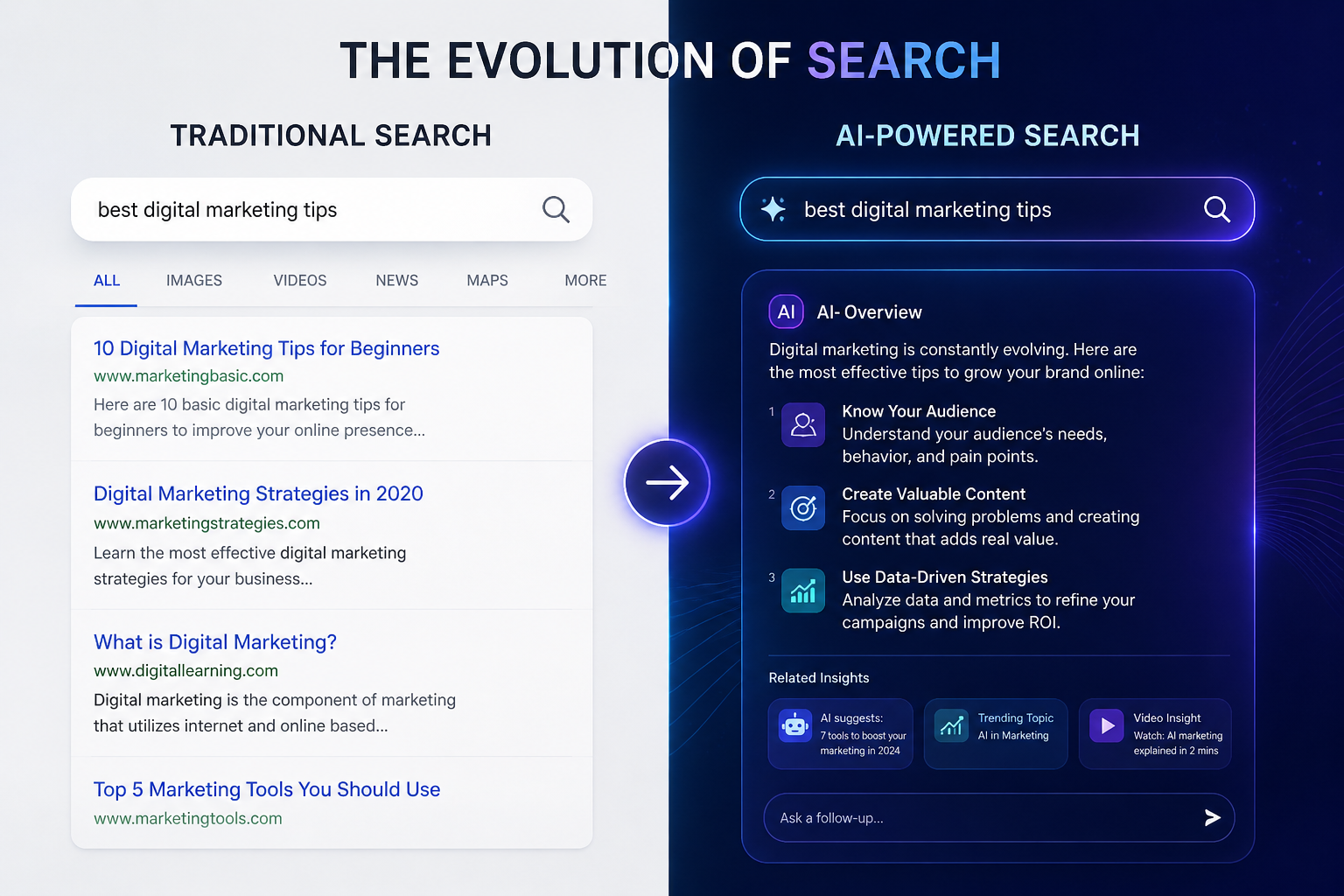
1. AI-Driven Search Results Are the New Normal
Search engines now use advanced AI models to understand user intent rather than just matching keywords. Tools like Google Search Generative Experience are reshaping how results appear often providing direct, conversational answers.
What this means for SEO:
- Focus on intent-based content, not just keywords
- Answer questions clearly and concisely
- Optimize for featured snippets and AI summaries
2. Content Quality Over Quantity
AI can now easily detect low-value or spammy content. Publishing large volumes of content without real value no longer works.
Winning strategy:
- Create in-depth, authoritative content
- Focus on E-E-A-T (Experience, Expertise, Authority, Trust)
- Add real insights, examples, and case studies
3. Rise of Conversational & Voice Search
With the growth of voice assistants, users now search in a more natural, conversational way.
SEO Tips:
- Use long-tail keywords and natural language
- Optimize for question-based queries (Who, What, How)
- Structure content with clear headings and answers
4. Zero-Click Searches Are Increasing
AI-generated answers often appear at the top, reducing the need for users to click on websites.
How to adapt:
- Optimize for featured snippets
- Provide quick, valuable answers upfront
- Build strong brand visibility even without clicks
5. Visual & Multimodal Search Is Growing
Search is no longer just text-based. Users can now search using images, videos, and even voice combined.
Action steps:
- Use high-quality images and videos
- Add alt text and structured data
- Optimize for platforms like Google Lens
6. AI Content: Helpful or Harmful?
AI tools like ChatGPT are widely used for content creation but search engines prioritize human value over AI-generated fluff.
Best practice:
- Use AI as a tool, not a replacement
- Always edit, personalize, and add expertise
- Ensure originality and authenticity
7. User Experience (UX) Is a Ranking Factor
AI tracks how users interact with your website with bounce rate, time on page, and engagement all matter.
Improve UX by:
- Speeding up your website
- Making it mobile-friendly
- Creating easy navigation
8. First-Party Data & Personalization
With increasing privacy regulations, reliance on third-party cookies is declining. Brands must now leverage their own data.
Focus on:
- Building email lists
- Creating personalized content experiences
- Using CRM and analytics tools effectively
SEO in 2026 is smarter, faster, and more user-focused than ever before. The evolution of Google Search through AI has shifted the focus from traditional tactics to value-driven, user-centric strategies.
To succeed, marketers must:
- Embrace AI tools wisely
- Focus on quality and intent
- Adapt to changing search behaviors
The future of SEO isn’t about gaming the algorithm, it’s about understanding your audience better than ever before.
