AI Search Optimization

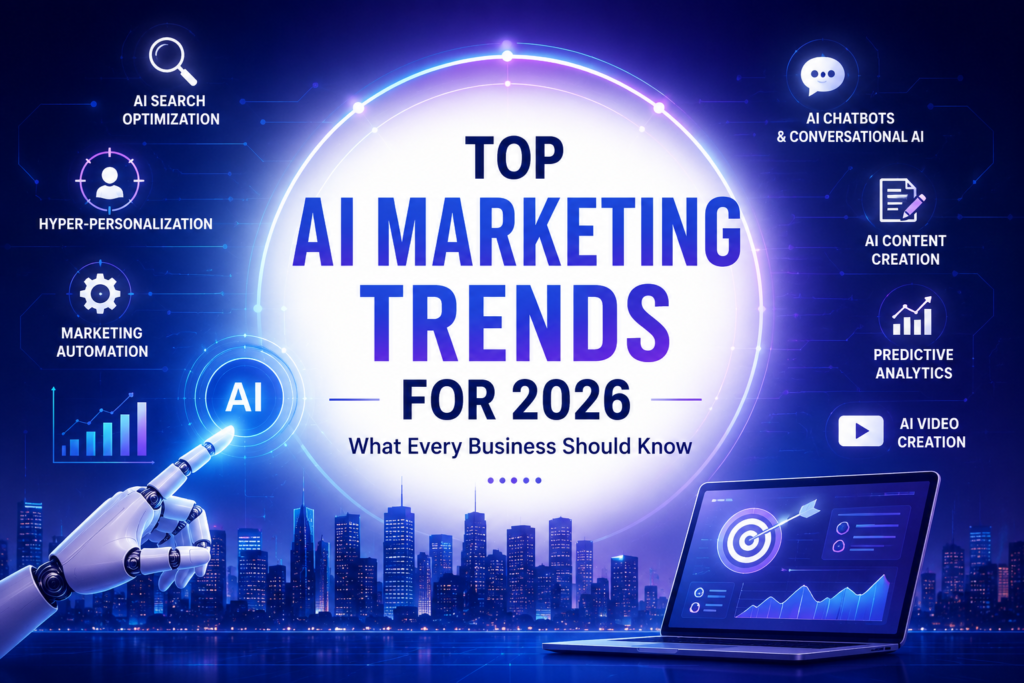
Futuristic AI marketing concept featuring a robotic hand, digital analytics dashboard, AI-powered marketing icons, and a city skyline with the centered title 'Top AI Marketing Trends for 2026'
SEO

Top AI Marketing Trends for 2026: What Every Business Should Know

Artificial Intelligence (AI) has transformed digital marketing faster than ever before. What started as AI-powered chatbots and content generators has now evolved into intelligent marketing systems that automate campaigns, personalize customer experiences, and even optimize websites for AI search engines. In this article, we’ll explore the top AI marketing trends for 2026 and how businesses can use them to stay ahead. 1. AI Search Optimization (ASO) Becomes Essential Traditional SEO is no longer enough. AI-powered search platforms like ChatGPT, Google AI Mode, Gemini, and Perplexity are changing how users find information. Instead of browsing multiple websites, users increasingly rely on AI-generated answers. Businesses must optimize for: Clear and structured content FAQ sections Conversational keywords Topical authority High-quality backlinks EEAT (Experience, Expertise, Authoritativeness, Trustworthiness) Brands that optimize for AI search will gain greater visibility beyond traditional search engine rankings. 2. Hyper-Personalized Marketing Using AI Generic marketing campaigns are becoming less effective. AI now analyzes customer behavior, purchase history, browsing habits, and interests to deliver personalized experiences. Examples include: Personalized email campaigns Customized product recommendations Dynamic website content Personalized advertisements Individualized landing pages This level of personalization improves engagement, customer satisfaction, and conversion rates. 3. AI Content Creation Gets Smarter Content creation has become significantly faster thanks to AI. Modern AI tools help marketers create: Blog posts Social media captions Instagram reels YouTube scripts Email newsletters Product descriptions Ad copy However, businesses should use AI as an assistant rather than replacing human creativity. The best-performing content combines AI efficiency with human expertise and storytelling. 4. Voice Search and Conversational Marketing Continue Growing Voice assistants are becoming increasingly intelligent. Consumers now search using natural language such as: “What’s the best digital marketing agency near me?” Instead of typing short keywords, users ask complete questions. Businesses should optimize content using: Long-tail keywords Question-based headings Conversational language FAQ pages Local SEO optimization Voice-friendly content also performs better in AI-powered search engines. 5. AI-Powered Marketing Automation Marketing automation has evolved beyond scheduled emails. AI now automates: Lead nurturing Customer segmentation Campaign optimization Email personalization Social media scheduling Customer support This saves time while improving campaign performance. Small businesses can now compete with larger companies using affordable AI automation tools. 6. Predictive Analytics Improves Marketing Decisions Instead of reacting to customer behavior, marketers can now predict it. AI analyzes historical data to forecast: Customer purchases Churn probability Best campaign timing Product demand Seasonal trends Predictive analytics helps businesses invest their marketing budget more effectively. 7. AI Video Creation Dominates Social Media Short-form video continues to dominate platforms like Instagram, YouTube Shorts, LinkedIn, and TikTok. AI tools now generate: Talking avatar videos Product demos Animated explainers AI voiceovers Auto-generated subtitles Video translations Businesses that consistently publish engaging AI-assisted videos are seeing higher engagement and stronger brand awareness. 8. AI Chatbots Become Sales Assistants Modern AI chatbots can now: Answer customer questions instantly Recommend products Book appointments Collect leads Handle customer support Qualify prospects Instead of basic scripted responses, AI chatbots understand context and provide natural conversations, improving customer experience while reducing support costs. 9. Brand Authority Becomes More Important Than Keywords AI search engines prioritize trusted sources. Rather than relying only on keyword optimization, businesses need to build strong brand authority by: Publishing expert content Earning quality backlinks Collecting customer reviews Maintaining consistent branding Demonstrating industry expertise Brands recognized as authoritative are more likely to be cited in AI-generated search responses. 10. Human Creativity + AI Delivers the Best Results AI can generate content quickly, but creativity, emotional storytelling, and strategic thinking still require human input. Successful marketers in 2026 use AI to: Research topics Generate ideas Draft content Analyze performance Automate repetitive tasks Humans then refine the messaging, ensure accuracy, and create meaningful customer experiences. This collaboration leads to higher-quality marketing and stronger business results. How Businesses Can Prepare for AI Marketing To stay competitive in 2026, businesses should: Optimize websites for AI search and conversational queries. Invest in AI-powered marketing automation. Use AI to accelerate content creation while maintaining human oversight. Create high-quality videos for social media. Build topical authority through valuable, trustworthy content. Monitor analytics and use predictive insights to refine campaigns. Prioritize customer experience with personalized marketing.
SEO

The Complete AI Search Optimization Guide: SEO + AEO + GEO Explained

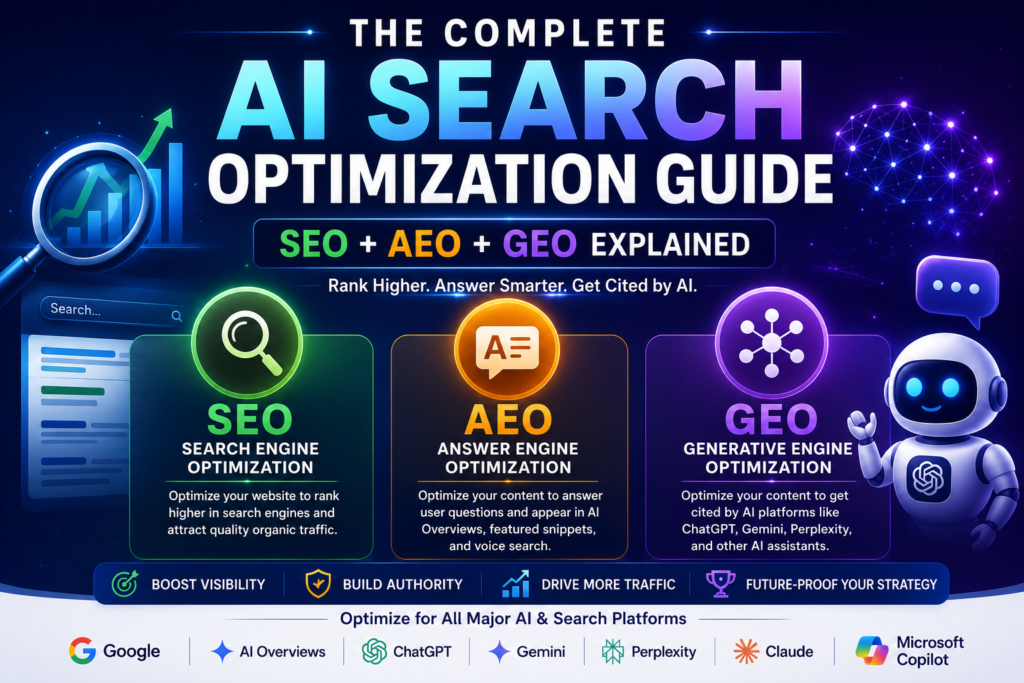
To stay visible in 2026, your digital strategy should combine Search Engine Optimization (SEO), Answer Engine Optimization (AEO), and Generative Engine Optimization (GEO). Together, these approaches help your content rank in search engines, appear in AI generated answers, and increase your brand’s visibility across the modern search ecosystem. This guide explains each strategy, how they differ, and how to build an AI-ready optimization plan. What Is AI Search Optimization? AI Search Optimization is the process of optimizing your website and content so it can be discovered, understood, and recommended by both traditional search engines and AI-powered search platforms. Instead of focusing only on ranking for keywords, AI Search Optimization helps your content become: Easy for AI systems to understand Credible enough to cite Structured for direct answers Helpful for real user questions Optimized across multiple search platforms The goal is simple: be the source AI chooses when answering users’ questions. Understanding SEO Search Engine Optimization (SEO) focuses on improving your website’s visibility in search engines like Google and Bing. SEO Best Practices Perform keyword research Publish high-quality content Optimize title tags and meta descriptions Improve page speed Build high-quality backlinks Create a mobile-friendly website Strengthen internal linking Enhance user experience SEO remains the foundation of online visibility because AI systems also rely on authoritative, well-optimized websites as trusted sources. What Is AEO? Answer Engine Optimization (AEO) is the practice of optimizing content so it directly answers users’ questions. Instead of targeting only keywords, AEO focuses on creating concise, accurate, and structured answers that search engines and AI assistants can easily extract. AEO Strategies Answer common customer questions Add FAQ sections Use structured headings Implement Schema Markup Write clear definitions Create step-by-step guides Use conversational language Target long-tail question keywords Example: Instead of writing: “SEO improves rankings, Write: “SEO improves your website’s visibility in search engines by optimizing content, technical performance, and authority, helping businesses attract more organic traffic.” This format is much more likely to appear in AI generated answers. What Is GEO? Generative Engine Optimization (GEO) focuses on making your content more discoverable and citable by generative AI platforms like ChatGPT, Gemini, Claude, Perplexity, and Microsoft Copilot. Rather than ranking webpages, GEO helps AI models confidently reference your brand when generating responses. GEO Best Practices Publish original research Share real world case studies Include expert insights Build topical authority Maintain factual accuracy Update content regularly Use clear source attribution Strengthen brand credibility Create comprehensive guides The more trustworthy and authoritative your content becomes, the more likely AI systems are to mention it. Why Businesses Need All Three Many businesses still invest only in SEO. While SEO remains essential, relying on it alone can limit your visibility as users increasingly turn to AI-generated answers. By combining SEO, AEO, and GEO, you can: Increase organic traffic Improve visibility in AI Overviews Build stronger brand authority Earn mentions from AI platforms Reach users across multiple search experiences Future proof your digital marketing strategy How to Optimize Your Website for AI Search 1. Create Helpful Content Focus on solving users’ problems instead of stuffing keywords. 2. Cover Topics in Depth Publish comprehensive resources that answer related questions and establish topical authority. 3. Use Question-Based Headings Examples include: What is SEO? How does AEO work? Why is GEO important? Question style headings help AI systems identify answer worthy content. 4. Add Structured Data Implement Schema Markup such as: FAQ Schema Article Schema Organization Schema Breadcrumb Schema Structured data helps search engines better understand your content. 5. Build Authoritative Content Support your claims with: Statistics Industry reports Original research Expert opinions Real case studies Authority increases the likelihood of AI citations. 6. Improve Technical SEO Ensure your website has: Fast loading speeds Mobile responsiveness HTTPS security Clean URLs Strong Core Web Vitals Proper indexing Technical excellence remains crucial for both search engines and AI systems. 7. Keep Content Fresh Review and update existing articles regularly to maintain accuracy and relevance. Common Mistakes to Avoid Avoid these common pitfalls: Writing only for keywords Ignoring user intent Publishing thin or duplicate content Skipping structured data Using outdated information Neglecting website performance Failing to demonstrate expertise and trustworthiness The Future of AI Search The future of search is not about replacing SEO, it is about expanding it. Traditional search engines are increasingly integrating AI-generated summaries, while standalone AI assistants are becoming major discovery channels. Businesses that embrace SEO, AEO, and GEO together will be better positioned to capture visibility across every stage of the modern search journey.

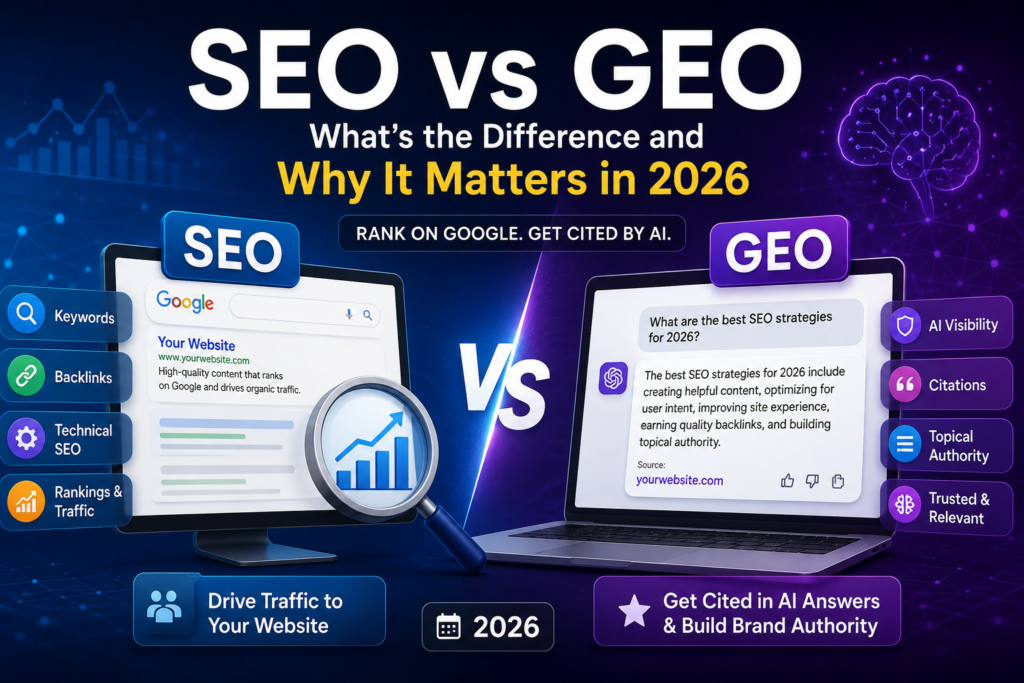
SEO vs GEO comparison infographic showing traditional Search Engine Optimization alongside Generative Engine Optimization, highlighting Google rankings, AI search visibility, citations, topical authority, and key differences for digital marketing in 2026.
SEO

SEO vs GEO: What’s the Difference and Why It Matters in 2026

Search marketing is undergoing its biggest transformation since Google’s early days. While Search Engine Optimization (SEO) remains essential for improving rankings on traditional search engines, the rapid adoption of AI-powered search platforms like ChatGPT, Google AI Overviews, Perplexity AI, and Gemini has introduced a new optimization strategy known as Generative Engine Optimization (GEO). What Is SEO? Search Engine Optimization (SEO) is the process of improving a website’s visibility on search engines like Google and Bing. The goal is to rank higher for relevant keywords so users can discover your website through organic search results. SEO focuses on helping search engines understand your content while providing users with valuable information. What Is GEO? Generative Engine Optimization (GEO) is the practice of optimizing content so AI-powered search engines and large language models can understand, trust, and reference your information when generating answers. Instead of simply ranking webpages, GEO helps your content become part of AI-generated responses. Popular AI search platforms include: ChatGPT Search Google AI Overviews Google Gemini Perplexity AI Microsoft Copilot When someone asks: “What’s the best SEO strategy for small businesses?” An AI engine may summarize information from multiple trusted websites instead of showing only traditional search results. GEO increases the likelihood that your content is selected as one of those trusted sources.   Why GEO Matters in 2026 AI-powered search is changing how people discover information. Instead of browsing multiple websites, users increasingly rely on AI assistants to provide complete answers in seconds. This shift means businesses need to optimize not only for search engines but also for AI models that summarize and recommend content. Some major trends driving GEO include: Growing adoption of AI-powered search Increased use of conversational queries More zero-click searches Greater emphasis on trusted sources AI-generated summaries appearing above traditional search results Businesses that adapt early can gain a significant competitive advantage. SEO Is Not Dead—It’s Evolving Many marketers ask: “Is SEO dead?” and, The answer is no. SEO remains the foundation of online visibility. In fact, strong SEO often supports better GEO performance because AI systems tend to rely on authoritative, well-structured, and trustworthy content. Think of SEO as building a strong library, while GEO helps AI librarians find and recommend the best books. The future isn’t SEO or GEO. It’s SEO + GEO together. Common Mistakes to Avoid Publishing AI-generated content without human review Focusing only on keywords Ignoring search intent Creating thin or duplicate content Neglecting technical SEO Forgetting structured data Not updating outdated articles Writing for algorithms instead of users The Future of Search Marketing Search is becoming increasingly conversational, personalized, and AI-driven. Businesses that rely solely on traditional SEO risk losing visibility as AI-generated answers become more common. Forward-thinking brands are already investing in: AI-ready content Semantic optimization Entity-based SEO Topical authority GEO strategies Voice search optimization Answer-focused content The companies that embrace both SEO and GEO today will be better positioned to earn visibility across traditional search engines and AI-powered search experiences.    

DMCA.com Protection Status
Scroll to Top
