Social Media Marketing

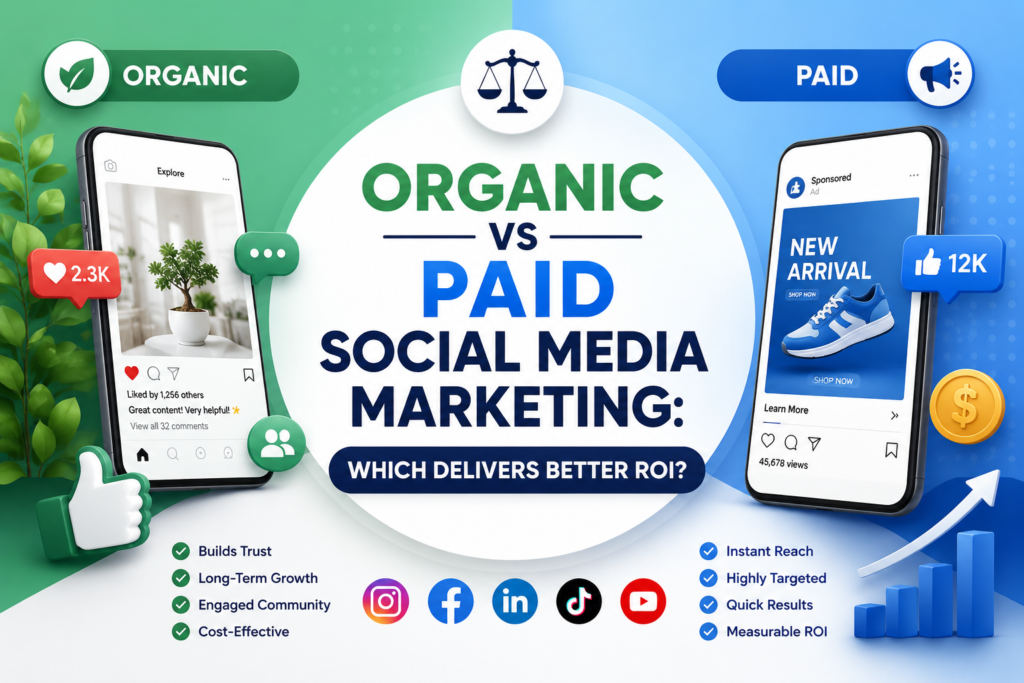
Organic vs Paid Social Media Marketing comparison infographic featuring a split green and blue design, centered title, social media platform icons, analytics graphics, and key benefits illustrating which strategy delivers better ROI
SEO

Organic vs Paid Social Media Marketing: Which Delivers Better ROI?

Social media has become one of the most effective marketing channels for businesses of all sizes. Whether you’re a startup, a local business, or a global brand, platforms like Instagram, Facebook, LinkedIn, TikTok, and X offer incredible opportunities to connect with your audience. By investing in professional SMO services, businesses can improve their online visibility, build stronger customer relationships, and create a consistent brand presence across multiple social media platforms. However, one question continues to challenge marketers: Should you invest in organic social media marketing or paid social media marketing? The answer depends on your goals, budget, and timeline. While organic marketing helps build long-term relationships and brand trust, paid campaigns can deliver immediate visibility and measurable results. What Is Organic Social Media Marketing? Organic social media marketing refers to all the content you publish without paying for distribution. This includes: Regular posts Reels Stories Carousels Educational videos Live sessions Community engagement User-generated content The goal is to grow your audience naturally through valuable content and meaningful interactions. Benefits of Organic Social Media Builds trust and credibility Creates long-term brand awareness Improves customer relationships Encourages community engagement Cost-effective for small businesses Supports SEO through increased brand searches Challenges Slower growth Declining organic reach on many platforms Requires consistent content creation Results take time What Is Paid Social Media Marketing? Paid social media marketing involves promoting content using advertising platforms such as: Facebook Ads Instagram Ads LinkedIn Ads TikTok Ads Pinterest Ads X Ads Businesses pay to reach a specific audience based on demographics, interests, behaviors, or purchasing intent. Benefits of Paid Social Media Instant reach Highly targeted audiences Fast lead generation Better conversion opportunities Detailed campaign analytics Easy budget scaling Challenges Requires advertising budget Results stop when ads stop Poorly optimized campaigns can waste money Requires regular monitoring and optimization Which Strategy Delivers Better ROI? The answer depends on your business objectives. Organic Marketing Delivers Better ROI When Building a long-term brand Growing a loyal community Increasing engagement Educating your audience Improving customer retention Organic content continues generating value long after it’s published. Paid Marketing Delivers Better ROI When Launching a new product Running seasonal campaigns Generating leads quickly Promoting limited-time offers Driving website traffic Increasing online sales Paid campaigns can produce results within hours when managed effectively. Why Combining Both Strategies Works Best The highest-performing brands don’t choose one—they combine both. A smart strategy includes: Organic Content Educational posts Industry tips Behind-the-scenes content Customer testimonials Reels Stories Community engagement Paid Campaigns Lead generation ads Website traffic campaigns Retargeting visitors Product promotions Event registrations Special offers Organic content builds trust, while paid advertising amplifies your best-performing content to the right audience. Tips to Maximize Social Media ROI Define Clear Goals Know whether you’re aiming for: Brand awareness Leads Website traffic Sales Engagement Track the Right Metrics Monitor: Reach Engagement rate Click-through rate (CTR) Cost per lead (CPL) Cost per acquisition (CPA) Conversion rate Return on ad spend (ROAS) Repurpose High-Performing Content If an organic Reel performs well, use it as a paid advertisement to reach more people. This often improves ad performance because the content has already proven engaging. Test Different Content Formats Experiment with: Short videos Carousels Infographics Stories Polls Live videos Regular testing helps identify what resonates most with your audience. Optimize Landing Pages Even the best social media campaign won’t succeed if users land on a slow or confusing website. Ensure your landing pages are fast, mobile-friendly, and designed to convert visitors into customers. Which Is Better for Small Businesses? For most small businesses, the ideal approach is: Build a strong organic presence with consistent, valuable content. Use paid campaigns strategically for launches, promotions, and lead generation. Analyze performance and adjust your budget based on what delivers the best results. This balanced strategy allows businesses to grow sustainably while taking advantage of the speed and precision of paid advertising.  
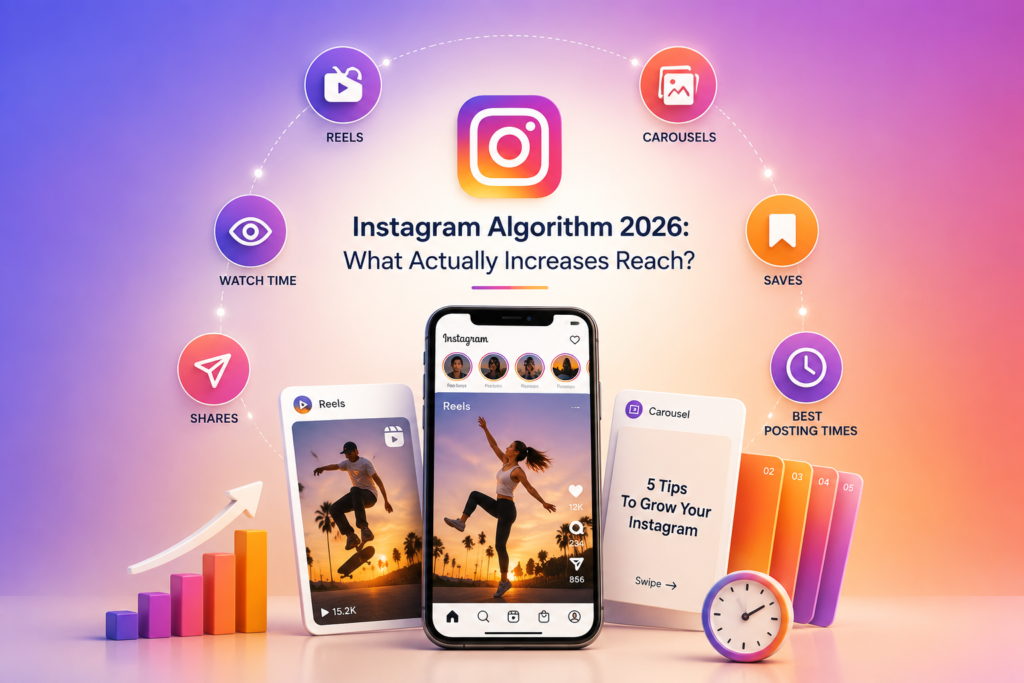
Instagram Algorithm 2026 featured image with Instagram interface, Reels, Carousels, engagement icons, watch time, saves, shares, and growth analytics illustrating strategies to increase organic reach.
SEO

Instagram Algorithm 2026: What Actually Increases Reach?

Instagram is placing more emphasis on original content and creator authenticity, while improving insights and AI labelling. If your Instagram reach has dropped despite posting consistently, you’re not alone. Instagram’s algorithm has evolved significantly in 2026, prioritizing content that keeps users engaged rather than simply rewarding frequent posting. A well-planned Content Strategy is now one of the biggest factors in achieving consistent organic growth on Instagram. Instead of posting randomly, brands and creators need to publish valuable, engaging content that encourages users to watch, save, share, and interact. The right content mix not only improves engagement but also signals to the Instagram algorithm that your posts deserve greater visibility. Let’s explore what actually increases Instagram reach in 2026. 1. Latest Instagram Ranking Signals Instagram no longer ranks content based solely on likes. Instead, it evaluates multiple engagement signals to determine whether your content deserves wider distribution. The most important ranking signals in 2026 include: Watch time Shares Saves Comments Profile visits Content originality User interaction history Relevance to user interests The algorithm first shows your content to a small audience. If those users engage positively, Instagram expands its reach to a larger audience through Explore, Reels, and suggested posts. Key takeaway: Quality engagement beats follower count. 2. Reels vs Carousels vs Stories Each content format serves a different purpose, and the algorithm rewards them differently. Reels Reels continue to offer the highest discovery potential because Instagram actively recommends them to non-followers. Use Reels when you want to: Reach new audiences Build brand awareness Go viral Share educational or entertaining content Carousels Carousels perform exceptionally well because users spend more time swiping through multiple slides. Perfect for: Tutorials Tips Case studies Before-and-after content Step-by-step guides Carousels also receive more saves than single-image posts, making them one of the best formats for organic growth. Stories Stories mainly strengthen relationships with your existing audience. Use Stories for: Polls Q&A sessions Behind-the-scenes content Product updates Daily engagement Pro Tip: A combination of Reels, Carousels, and Stories delivers the best overall performance. 3. Watch Time Is More Important Than Views In 2026, Instagram pays close attention to how long users watch your content. A Reel with fewer views but a higher average watch time often outperforms a video that receives many quick scrolls. To increase watch time: Grab attention within the first three seconds. Keep videos fast-paced. Use captions for silent viewers. End with a compelling takeaway. Create curiosity that encourages viewers to watch until the end. The longer people stay on your content, the more Instagram believes it provides value. 4. Saves and Shares Matter More Than Likes Many creators still chase likes, but saves and shares are far more valuable ranking signals. When someone saves your post, Instagram interprets it as useful content. When someone shares it with friends, the platform sees it as highly engaging and worth promoting. Create content people want to save, such as: Checklists Templates Marketing tips Industry statistics Educational carousels How-to guides Instead of asking followers to “Like this post,” encourage them to Save this for later or Share it with someone who needs it. 5. Common Mistakes That Reduce Reach Even great content can struggle if you make these common mistakes. Posting inconsistent content Random topics confuse both your audience and Instagram’s recommendation system. Using clickbait Misleading captions or exaggerated claims reduce trust and engagement. Ignoring comments Replying to comments encourages conversations and signals active engagement. Reposting low-quality content Instagram favors original, high-quality content over recycled posts. Focusing only on selling Accounts that constantly promote products without providing value often see lower engagement. Aim for an 80/20 balance—80% helpful content and 20% promotional content. 6. Best Posting Times in 2026 While there’s no universal “perfect” posting time, engagement tends to be highest when your audience is active. General best times include: Monday–Friday: 9:00–11:00 AM Tuesday & Wednesday: 6:00–8:00 PM Sunday: 10:00 AM–12:00 PM However, your own Instagram Insights provide the most accurate data. Analyze when your followers are online and schedule posts accordingly. Consistency matters more than chasing a specific hour.  

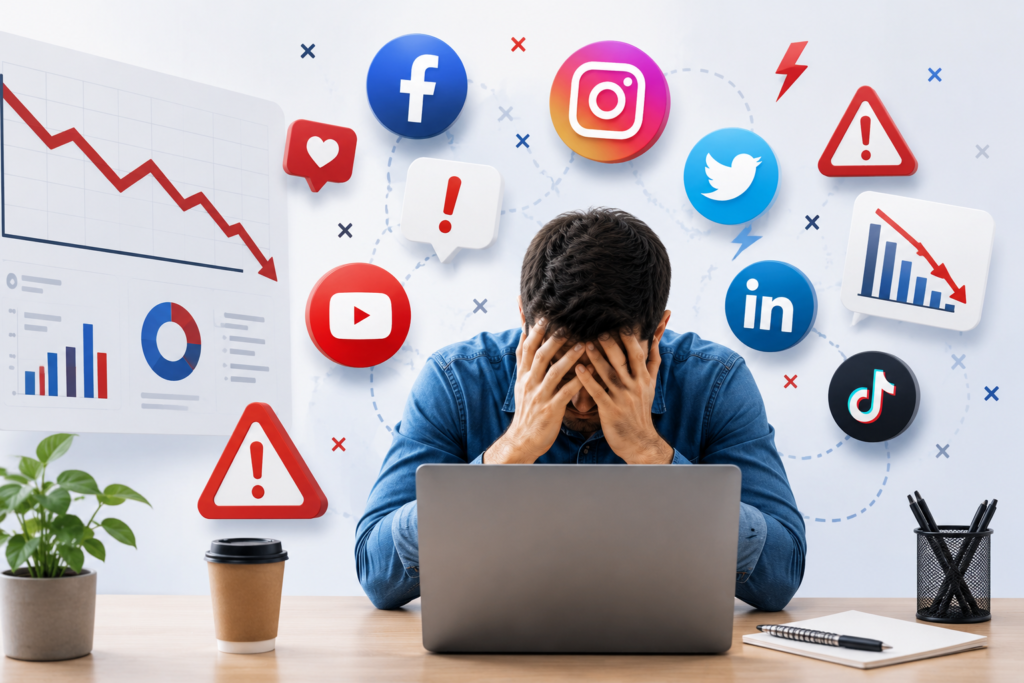
Frustrated businessman sitting at a desk with a laptop, surrounded by social media icons, warning symbols, declining analytics charts, and digital marketing elements representing social media marketing mistakes affecting business growth.
SEO

10 Social Media Marketing Mistakes That Hurt Business Growth

Social Media Marketing Mistakes can seriously affect a business’s online growth, engagement, and brand reputation. Today, platforms like Instagram, Facebook, and LinkedIn have become essential tools for connecting with customers and promoting products or services. This is why professional SMO Services are becoming increasingly important for businesses looking to build a strong digital presence. However, many businesses still struggle to achieve good results because of common social media marketing mistakes. Poor strategy, inconsistent posting, and ignoring audience engagement can limit growth and reduce return on investment. In this blog, we will explore the top mistakes businesses make in social media marketing and how to avoid them. 1. Posting Without a Strategy One of the biggest mistakes businesses make is posting content without a clear strategy. Random posts with no goal often fail to attract the right audience. A successful social media strategy should include: Target audience research Content planning Posting schedule Brand voice Marketing goals Without a strategy, businesses may waste time creating content that does not generate engagement or leads. How to Avoid It Create a monthly content calendar and define clear goals such as: Increasing followers Driving website traffic Generating leads Boosting engagement Improving brand awareness 2. Ignoring Audience Engagement Social media is not just about posting content. It is also about building relationships with your audience. Many businesses ignore comments, messages, and customer feedback. This can make followers feel unimportant and reduce trust in the brand. How to Avoid It Reply to comments quickly Answer direct messages Engage with followers’ content Ask questions and create polls Encourage conversations Active engagement helps build a loyal online community. 3. Inconsistent Posting Posting regularly is essential for maintaining audience interest. Many brands post actively for a few days and then disappear for weeks. Inconsistent posting can reduce visibility and hurt audience engagement. How to Avoid It Use scheduling tools to maintain consistency. Create a realistic posting schedule such as: 3–5 posts per week on Instagram Daily stories Weekly LinkedIn updates Regular short-form video content Consistency helps keep your brand visible and relevant. 4. Focusing Only on Selling Many businesses use social media only to promote products or services. Constant sales-focused content can push followers away. People use social media to learn, connect, and be entertained it’s not just to see advertisements. How to Avoid It Balance promotional content with: Educational posts Tips and tutorials Industry news Behind-the-scenes content Customer success stories Interactive posts Providing value helps build trust and increases engagement. 5. Ignoring Analytics Some businesses never track their social media performance. Without analytics, it is difficult to know what content works and what needs improvement. How to Avoid It Monitor important metrics such as: Reach Engagement Click-through rate Follower growth Conversion rate Use platform insights and analytics tools to improve your strategy over time. 6. Using Poor Quality Visuals Low-quality images and videos can damage your brand’s professional image. Visual content is one of the most important parts of social media marketing. How to Avoid It Use high-quality graphics and videos Maintain consistent branding Use modern designs Create visually appealing reels and posts Professional visuals help attract attention and improve credibility. 7. Not Optimizing for Mobile Users Most people access social media through mobile devices. Content that is not mobile-friendly may perform poorly. How to Avoid It Use vertical video formats Keep captions short and readable Design mobile-friendly graphics Optimize website landing pages for mobile users A smooth mobile experience improves user engagement. 8. Following Every Trend Trends can help increase visibility, but blindly following every trend may confuse your audience and weaken your brand identity. How to Avoid It Choose trends that align with your brand and audience. Focus on relevant and meaningful content instead of chasing every viral topic. 9. Ignoring Video Content Short-form video content is dominating social media platforms. Businesses that avoid video marketing may miss major growth opportunities. How to Avoid It You can create social media campaigns, blog content, and marketing strategies for your business Instagram Reels Short tutorials Product demos Customer testimonials Educational videos Video content often receives higher engagement than static posts. 10. Expecting Instant Results Social media marketing takes time. Many businesses quit too early because they expect immediate sales and viral growth. How to Avoid It Focus on long-term consistency and continuous improvement. Successful social media growth usually comes from: Regular posting Audience engagement Quality content Strategic advertising Patience and testing   Social media marketing can be a powerful growth tool when used correctly. Avoiding common mistakes like inconsistent posting, ignoring analytics, and focusing only on sales can significantly improve your results. Businesses that create valuable content, engage with their audience, and follow a clear strategy are more likely to build strong online visibility and long-term customer relationships.

DMCA.com Protection Status
Scroll to Top